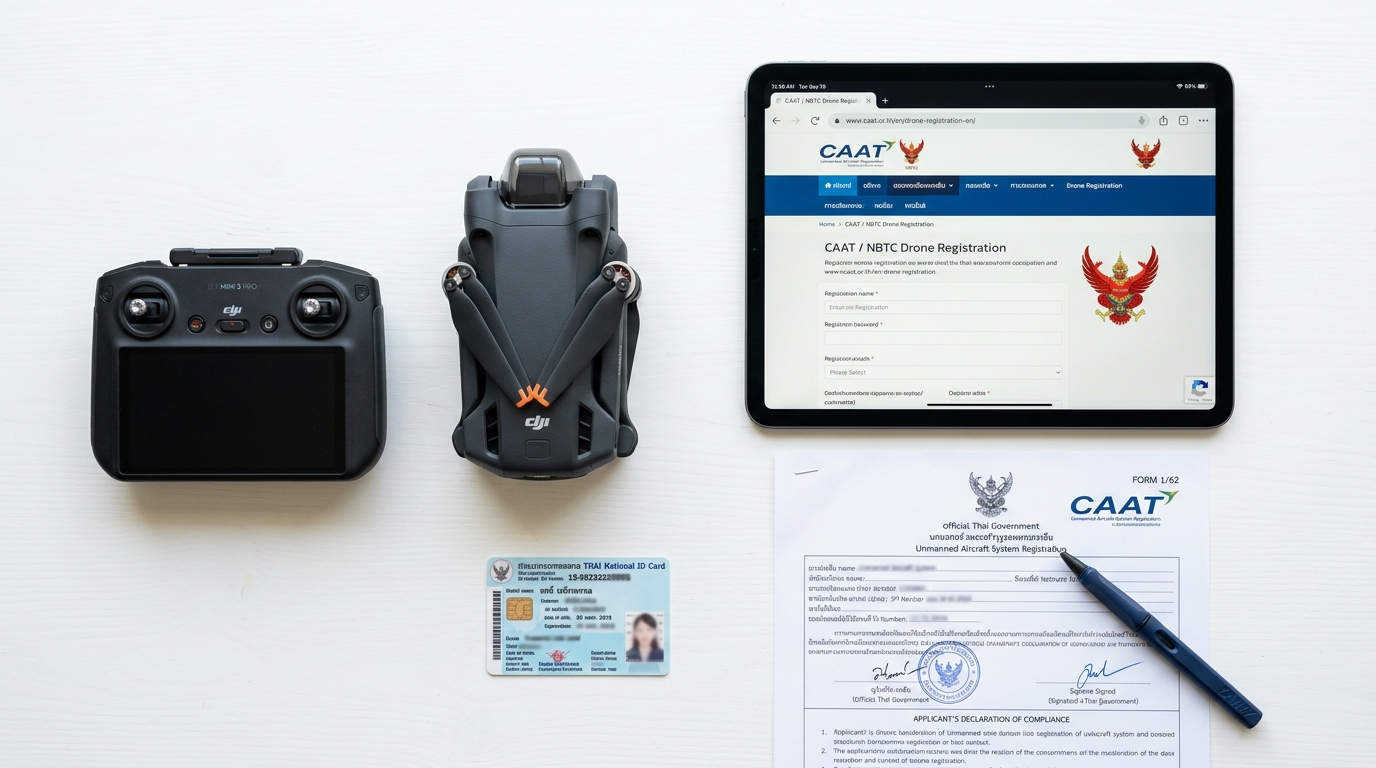
For those who just bought a drone, whether for photography, a hobby, or professional use, the first and most critical legal requirement in Thailand is drone registration. The first agency you must know and register with is the National Broadcasting and Telecommunications Commission, commonly known as NBTC.
Why register with the NBTC?
The primary purpose of NBTC registration is to regulate radio frequencies and telecommunication equipment. All drones use radio frequencies for remote control and video transmission. The NBTC oversees this to prevent drone frequencies from interfering with other services such as commercial aviation or mobile networks. It also serves to identify the owner of the radio transceivers inside the drone.
Which drones require NBTC registration?
- All drones with a camera: Regardless of size or weight, if it has a camera, it must be registered.
- Drones without a camera weighing over 2 kg: Even without a camera, heavy drones are required by law to be registered.
Note: Drones without a camera and weighing under 2 kg (such as small toy drones) are exempt from registration.
6 Steps for NBTC drone registration by yourself
Currently, the NBTC has made it convenient for users to register via their online portal at anyregis.nbtc.go.th with the following steps:
Step 1: Sign up and verify identity
Go to the NBTC AnyRegis website. Sign up using your email and fill in your basic personal information. The system will send a verification link to your email. Click it to activate your account.
Step 2: Select the "Kor Tor 30" menu
After logging in, select the menu "Application for Registration of Radiocommunication Equipment for Unmanned Aircraft (Kor Tor 30)", which is the specific form for drone registration.
Step 3: Fill in drone details
In this step, prepare your drone's information: Brand, Model, and Serial Number (usually found under the battery or on the packaging box). Check and fill this accurately to avoid your application being rejected.
Step 4: Upload required documents
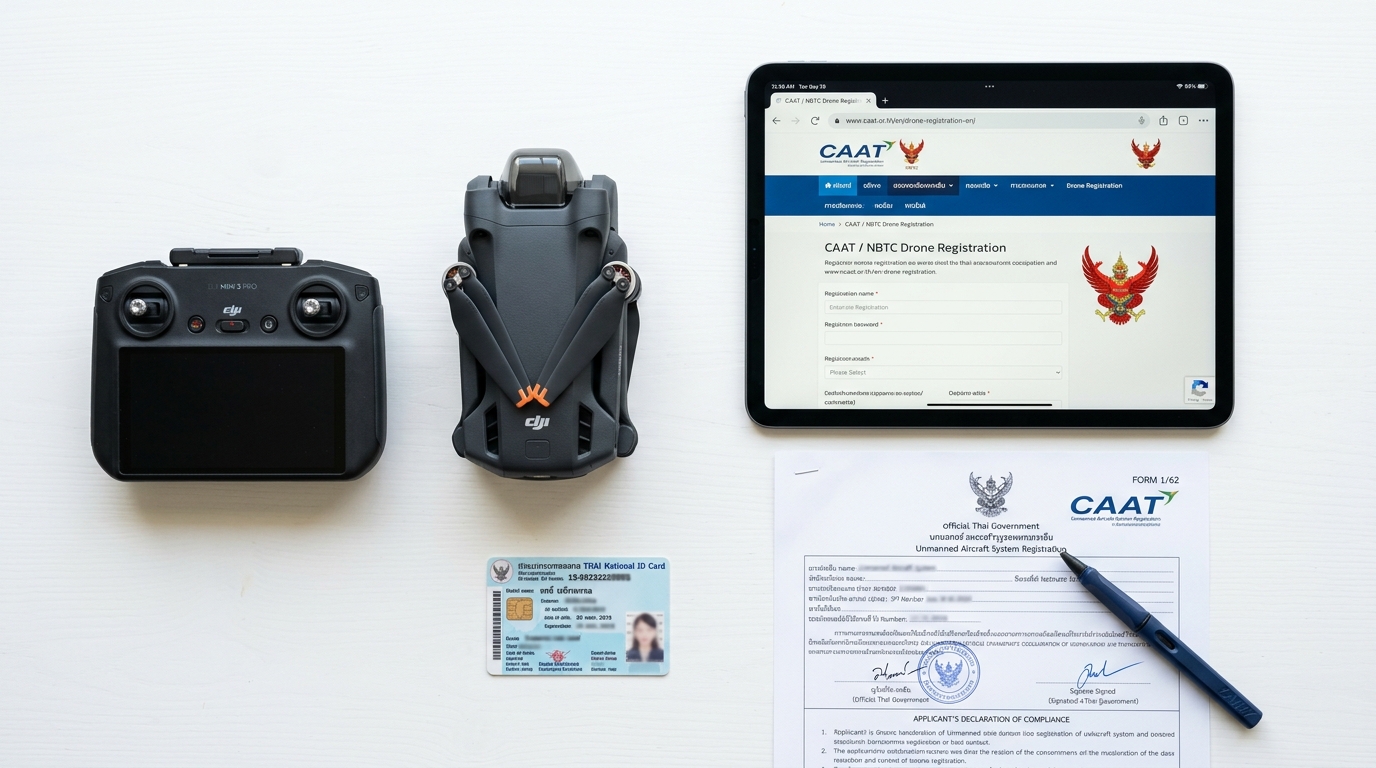
The system will ask you to upload documents (clear PDF or JPG format recommended). Required documents include:
- Copy of Passport (or Thai ID) signed as a certified true copy
- Full photo of the drone clearly showing its appearance
- Photo clearly showing the drone's Serial Number
- Receipt or tax invoice indicating the purchase of that specific drone
Step 5: Pay the fee
Once an officer verifies your documents and approves your request, the system will notify you to pay the registration fee. The NBTC drone permit Thailand fee is 214 THB (including VAT). You can download the invoice to pay via a banking application.
Step 6: Receive your permit (Registration Certificate)
After payment is completed and verified, you can download the "Radiocommunication Equipment Registration Certificate (Kor Tor 30)" from the AnyRegis system. This is an important document you must carry or keep on your phone whenever you fly your drone.
Penalties for not registering with NBTC
The law has severe penalties for those who fly an unregistered drone. Anyone possessing or using unauthorized radiocommunication equipment (drones) violates the Radiocommunication Act B.E. 2498 and faces up to 5 years in prison, a fine of up to 100,000 THB, or both.
Want a hassle-free process? Let RRCT handle everything in one place
Our professional team handles both NBTC + CAAT registration and arranges third-party liability insurance. The 214 THB fee is already included. Starting from ฿1,299.
Summary
NBTC drone registration is an indispensable first step for flying drones in Thailand. Although the anyregis.nbtc.go.th online portal is more convenient, many foreigners face difficulties preparing documents, finding the Serial Number, or tracking approval status. Using an expert service like RRCT is an alternative that saves time and guarantees you can fly your drone 100% legally.