Thailand Drone No-Fly Zones 2026 – Complete Guide
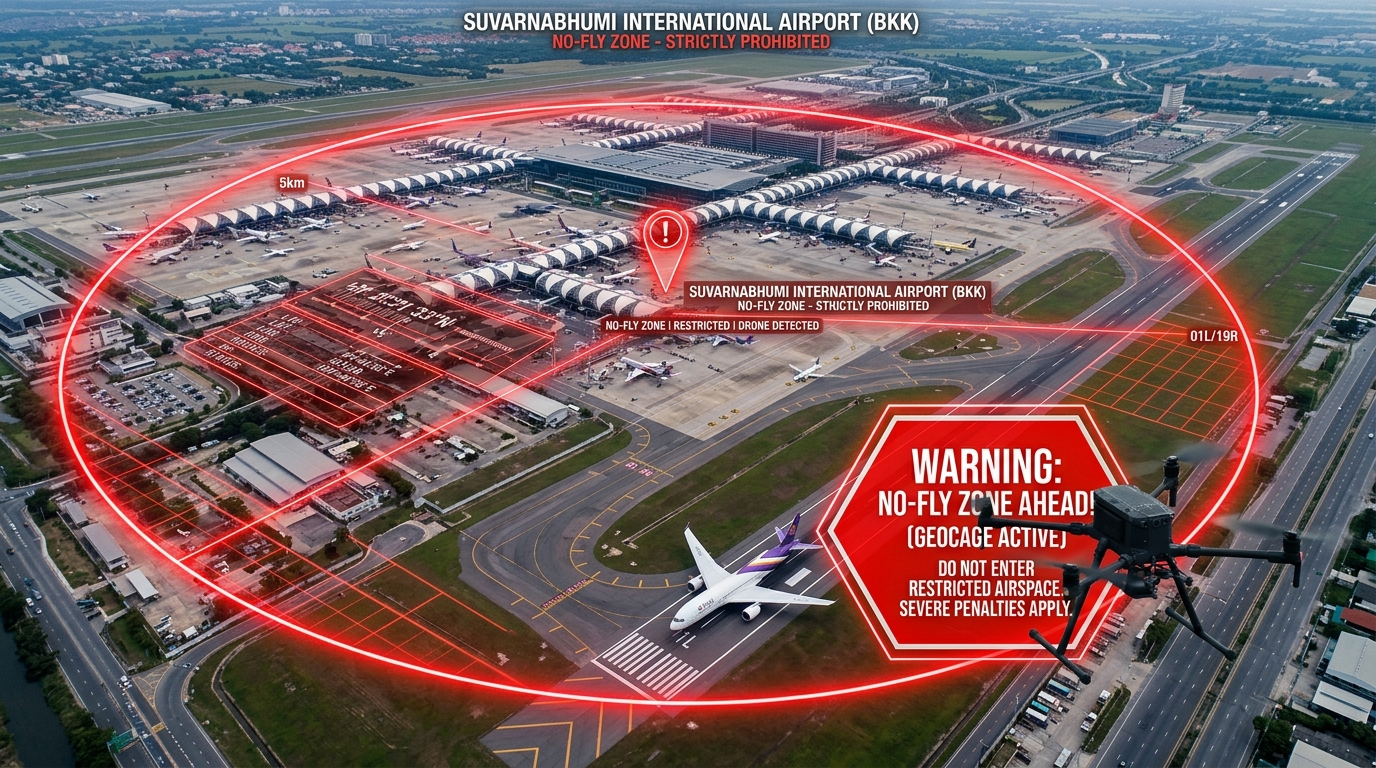
Flying a drone in Thailand requires more than just proper legal registration. One of the most important things is knowing "where you can fly and where you cannot". Flying a drone in a No-Fly Zone not only endangers aviation and others, but also carries severe criminal penalties.
In 2026, the Civil Aviation Authority of Thailand (CAAT) has clearly updated and defined restricted flying areas. This article summarizes all No-Fly Zones in Thailand, how to check them before flying, and precautions for popular tourist destinations.
1. Categories of No-Fly Zones in Thailand
The law designates main restricted areas into 6 categories:
- ✈️ A. Airport Zones: Strictly no flying within a 9-kilometer (approx. 5 miles) radius of any airport, international or domestic (e.g., Suvarnabhumi, Don Mueang, Phuket, Chiang Mai, Hat Yai, U-Tapao, Krabi, Samui). Special permission is required to fly here.
- 👑 B. Royal Residences: Absolutely no flying under any circumstances around palaces, royal residences, and temples within the Grand Palace (e.g., Wat Phra Kaew) for maximum safety and security.
- 🛡️ C. Military/Government Zones: Military camps, high-security government buildings, or prisons — strictly prohibited without prior permission.
- 🌲 D. National Parks: Not all are strictly banned, but you must seek permission from park officials before flying. Some parks strictly prohibit drones to avoid disturbing wildlife and other visitors.
- 🏢 E. Densely Populated Areas: No flying over crowds, festivals, or busy public spaces. A falling drone can cause severe injuries.
- 🚗 F. Over Highways: No flying over busy highways or expressways to prevent accidents.
Want to fly your drone with peace of mind? Let RRCT help.
If you register your drone with RRCT, we offer free consultation on no-fly zones, starting at just 1,299 THB.
Contact LINE for Consultation2. Altitude Rules and Popular Tourist Spots to Watch Out For
Even if you are not in a No-Fly Zone, the law restricts the maximum flying altitude to 90 meters (approx. 300 feet) from the ground. Flying above this altitude is strictly prohibited everywhere to prevent collisions with general aviation aircraft.
For tourists, there are several popular destinations that require special caution:
- Phuket: Most of the area around Mai Khao Beach near the airport is a strict 9 km no-fly zone.
- Koh Samui: Samui Airport is located near beaches and communities, putting most of the island within a restricted radius.
- Khao Yai and Doi Inthanon National Parks: You must request permission from the park chief in advance; unauthorized flying is prohibited.
- Bangkok: Places like Chatuchak Market or large public parks are restricted because they are densely populated and often close to royal zones.
3. How to Check No-Fly Zones Before Flying (2026 Update)
Before taking off, you should always verify the area by following these 3 steps:
Step 1: Check via Official Apps
Use the CAAT application or check via the UAS Portal website, which displays a real-time map of restricted areas in Thailand.
Step 2: Use Drone Companion Apps
Applications like AirMap or the DJI Fly App have GEO Zone systems that display red areas (no-fly) and will automatically lock the drone from taking off if within those zones.
Step 3: Look for Signs and Ask Officials
Even if an app says it's clear, if a location (e.g., park, resort, temple) has a no-drone sign or is private property, you must always ask the owner for permission.
4. Special Area Permits
If you absolutely must fly in a restricted area (e.g., for filming, news, sports events, or government work), you can do so by requesting special permission from CAAT and the relevant authorities (like the Air Force or AOT for airports) at least 15-30 days in advance. This process is mostly used for commercial drones.
⚠️ Penalties for Flying in Restricted Areas
Violating No-Fly Zones is an offense under the Air Navigation Act and can lead to severe fines or imprisonment. Additionally, you may face criminal charges for trespassing or national security offenses, and your drone will be confiscated immediately.
Knowing before you fly is safer with RRCT
Let us assist you in registering your drone legally and provide private consultation on legal requirements and restricted areas.
Contact LINE for Consultation